PULS! – Digital population study on health in times of crisis
Systematically recording the health consequences of climate crises and more





Global pandemics, extreme weather events, and political conflicts have a direct impact on physical, mental, and social health. At the same time, there is often a lack of structured, timely data to analyse these effects in a differentiated way and to derive effective measures.
The PULS study investigates how crisis events affect the overall health of the population, which groups are particularly affected, and how well people are prepared for such situations.
The aim is to provide robust data to support public health strategies and health policy decision-making.
Study design
- Baseline survey on health status and living situation
- Quarterly follow-ups
- Event-related surveys during acute crises (e.g. heat waves, new outbreaks of infectious diseases)
The study is conducted by the Center for Preventive Medicine and Digital Health at the Mannheim Medical Faculty of Heidelberg University.
Over a period of two years, participants will be surveyed regularly using digital questionnaires:
Participants also have the option to provide their activity data (steps). The focus is on a holistic perspective on health—physical, mental, and social—as well as on resilience, perception, and the societal assessment of crisis measures.

Our role: Technical infrastructure for scalable data collection
Data4Life is the technical enabler in this project. With the D4L Collect study platform, we provide the digital infrastructure for:
- structured, standardised data collection via smartphone (questionnaire and activity data)
- secure digital consent processes
- GDPR-compliant data storage
- encrypted data transmission
- scalable implementation of longitudinal studies
Data is stored on servers at Heidelberg University Hospital in Germany. D4L Collect enables research institutions to efficiently implement population-based studies – without the need for complex in-house development of technical systems.
The PULS! study thus addresses key challenges in modern public health research:
- Dynamic events require flexible data collection tools
- Population studies need low barriers to participation
- Long-term observations must be technically stable and securely reproducible
- Data must be structured, interoperable, and scientifically usable.
Digital study infrastructures are a crucial factor in capturing crisis data prospectively and in real time, rather than retrospectively.
Frequently asked questions
How does D4L Collect support the implementation of longitudinal population studies?
D4L Collect enables the structured and scalable implementation of digital studies via smartphone-based data collection.
Research institutions benefit from:
Digital consent management
Standardized questionnaires and PRO surveys
longitudinal study logic (e.g., follow-ups, event-triggered surveys)
secure, GDPR-compliant data processing
export options for scientific analysis
This allows studies to be implemented efficiently without having to set up your own technical infrastructure.
How are data protection and data sovereignty guaranteed?
Data protection is an integral part of the platform architecture.
D4L Collect works with:
encrypted data transmission
pseudonymized data sets
clearly defined role and access concepts
hosting in secure, regulatory-compliant environments
Data sovereignty lies with the respective research partner. Data4Life acts as a technical enabler and processes data exclusively within the framework of the agreed study architecture.
For which study formats is D4L Collect particularly suitable?
The platform is particularly suitable for:
longitudinal cohort studies
public health studies
digital intervention studies
event-based surveys
hybrid or decentralized study designs
Thanks to its modular architecture, the infrastructure can be adapted to different study designs and regulatory requirements.
I would like to use D4L Collect for a research project. Who can I contact?
If you would like to use D4L Collect for your scientific activities, simply send an email to: b2b@data4life.care.
You are interested in our sensor data collection platform D4L Collect?
A Quick Overview
Related articles
A Study in Motion – Smartphones and Wearables in Stroke Rehabilitation
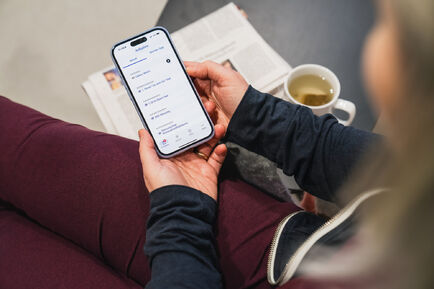
The Sensor-S study shows how data from sensors, wearables, CGMs, and PROMs can be integrated in a digital research infrastructure to enable data-driven, patient-centered stroke rehabilitation.
PAM-13: Measuring Patient Activation in Clinical Research and Rehabilitation
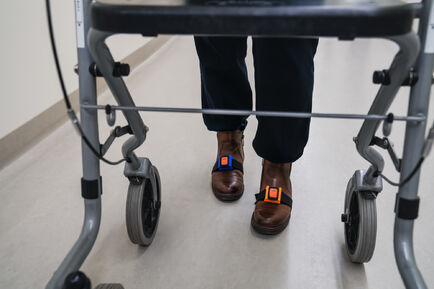
PAM-13 measures how actively patients manage their health. The validated questionnaire captures knowledge, motivation, and self-efficacy, making it a key outcome measure e.g. in digital health studies